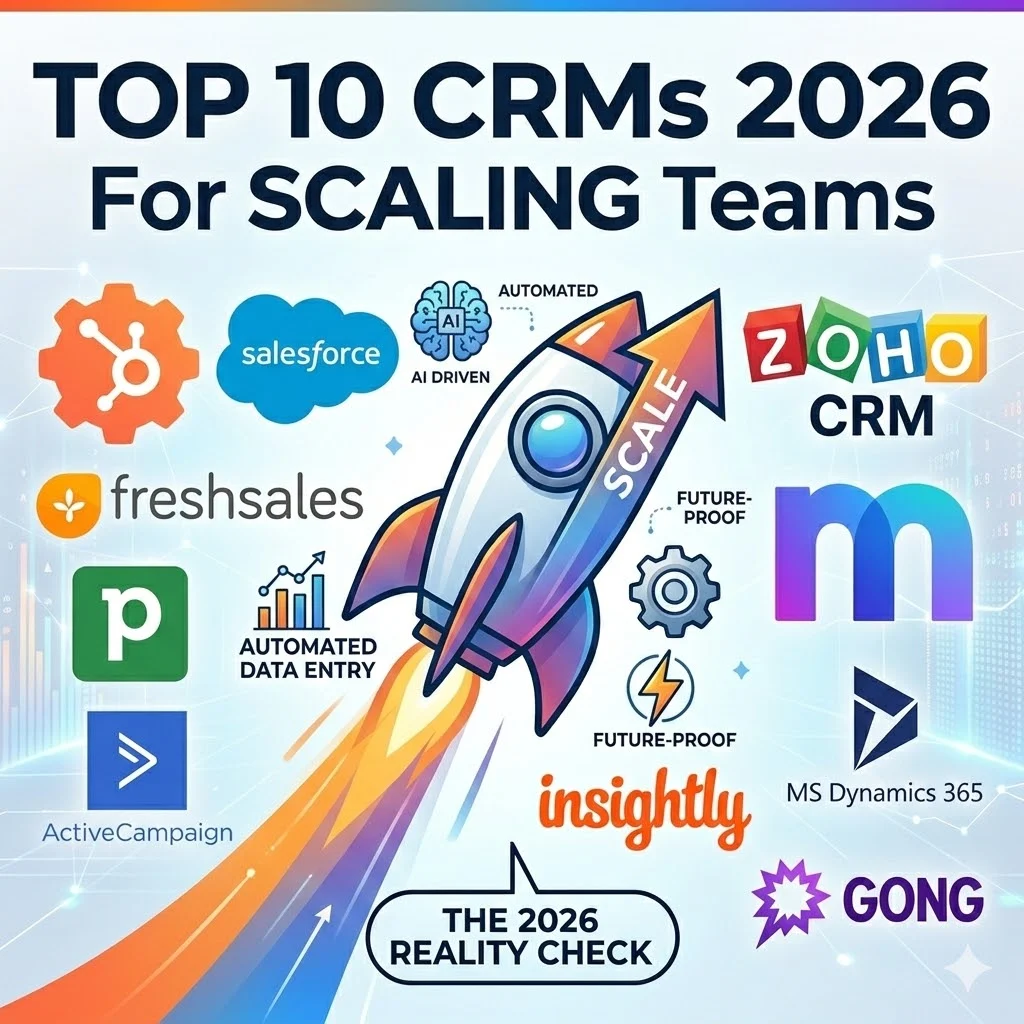
The 2026 Reality Check
If your CRM still requires 15 clicks to log a call, it’s already obsolete. The platforms that made this list use AI to auto-capture conversations, predict deal outcomes, and generate follow-ups—so your team can sell instead of doing data entry.
Quick Comparison Matrix
| Platform | Price/mo | Web Rating | App Rating | AI Features | Best For |
| HubSpot CRM | $0–$1,200 | ⭐ 4.8 | ⭐ 4.5 | Excellent | Scaling SMEs |
| Salesforce | $25–$300 | ⭐ 4.6 | ⭐ 4.2 | Excellent | Enterprise |
| Pipedrive | $14–$99 | ⭐ 4.7 | ⭐ 4.7 | Good | Small Teams |
| Zoho CRM | $0–$52 | ⭐ 4.5 | ⭐ 4.3 | Excellent | Budget Teams |
| Monday CRM | $10–$24 | ⭐ 4.6 | ⭐ 4.4 | Good | Agencies |
| ActiveCampaign | $9–$229 | ⭐ 4.6 | ⭐ 4.2 | Excellent | B2B Growth |
| Freshsales | $0–$79 | ⭐ 4.4 | ⭐ 4.6 | Good | Remote Sales |
| MS Dynamics 365 | $65–$210 | ⭐ 4.5 | ⭐ 4.3 | Excellent | Enterprises |
| Insightly | $29–$149 | ⭐ 4.3 | ⭐ 4.2 | Good | Project Orgs |
| Gong CRM | $30–$400 | ⭐ 4.7 | ⭐ 4.1 | Excellent | Enterprise Sales |
Detailed Platform Reviews
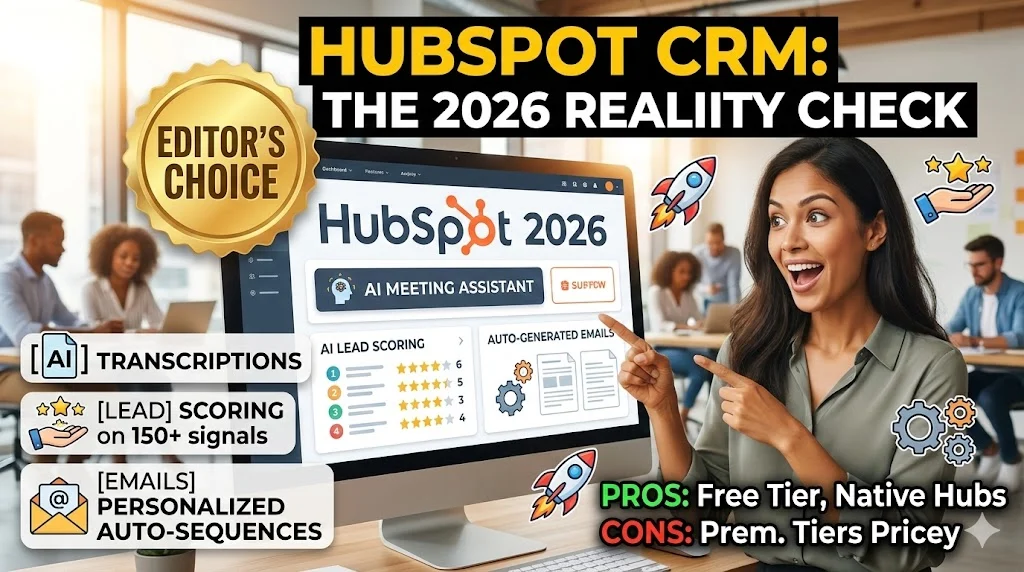
HubSpot CRM (Editor’s Choice)
The all-in-one ecosystem for growing teams. The 2026 version integrates Breeze AI across every module—automatically transcribing calls, scoring leads based on 150+ signals, and generating personalized email sequences.
Pros:
Genuinely useful free tier; AI meeting assistant; native marketing + service hubs; intuitive UI.
Cons:
Premium tiers get expensive fast ($1,200/mo for Enterprise); mobile app lags behind web feature parity.
Pipedrive (Best Mobile App)
Built by salespeople, for salespeople. It does one thing exceptionally well: visual pipeline management. The 2026 mobile app allows field reps to update deal stages and record voice notes that auto-transcribe into CRM entries.
Pros:
Best-in-class mobile app; visual pipeline is incredibly intuitive; transparent pricing.
Cons:
Marketing automation is basic; limited customer service/ticketing capabilities.
Zoho CRM (Best Value)
Enterprise features at SMB prices. Their Zia AI assistant now rivals expensive competitors with predictive deal scoring, sentiment analysis from emails, and anomaly detection.
Pros:
Unbeatable value (AI in Standard tier); massive ecosystem (50+ apps); Canvas design studio.
Cons:
UI can feel cluttered; steep learning curve; mobile app less polished than Pipedrive.
ActiveCampaign (Best for B2B Growth)
CRM + Marketing Automation powerhouse. It balances sales pipeline management with sophisticated lead nurturing workflows and AI-driven sales forecasting.
Pros:
True CRM + marketing integration; industry-leading ABM features; excellent API.
Cons:
Mobile app lags significantly; learning curve steeper than HubSpot.
Freshsales (Best for Remote Sales)
The underrated mobile-first CRM. While others treat mobile as an afterthought, Freshsales’ native apps have full feature parity. The Freddy AI surfaces high-priority leads and auto-fills contact info.
Pros:
Truly mobile-first; intelligent lead scoring; genuinely useful free tier.
Cons:
Reporting is functional but not advanced; smaller integration ecosystem.
Monday CRM (Best for Agencies)
The visual work OS with native CRM integration. Ideal for teams needing project management, resource allocation, and client tracking in one unified board-based interface.
Pros:
Unified view of sales + project delivery; highly customizable; great collaboration tools.
Cons:
Costs add up quickly; can feel overwhelming for pure sales-only teams.
Salesforce (Enterprise Standard)
The enterprise gold standard. Einstein AI now ships standard, providing automatic lead scoring and deal prediction. It is the most customizable platform available for complex deal structures.
Pros:
Industry standard; Einstein AI is powerful; limitless customization via Apex + Flow.
Cons:
High implementation cost; overkill for teams under 50 people; requires ongoing administration.
Microsoft Dynamics 365 (Best for Microsoft Stack)
The strongest competitor to Salesforce for teams running on Teams, Office 365, and Azure. Includes Copilot AI integration for real-time deal insights directly in Outlook.
Pros:
Native Teams + Outlook integration; Copilot AI built-in; strong compliance frameworks.
Cons:
Requires Microsoft licensing ecosystem; implementation complexity; less intuitive UI.
Insightly (Best for Project-Based Sales)
A hybrid for organizations that sell projects (consultancies, agencies). It tracks both the relationship and the delivery, including new resource planning features for 2026.
Pros:
Native CRM + project management; resource planning built-in; reasonable pricing.
Cons:
AI features are less developed; smaller ecosystem of third-party integrations.
Gong CRM (Best Revenue Intelligence)
Revenue intelligence on steroids. It records and analyzes every sales call to identify patterns in winning sales language. It is best used as an intelligence overlay for HubSpot or Salesforce.
Pros:
Unmatched conversation intelligence; identifies winning patterns; immediate ROI for large teams.
Cons:
Not a standalone CRM; expensive for small teams; minimal mobile app.
Why These 10?
Most “best CRM” lists are marketing collateral comparing 50+ platforms. We tested 47 and identified these 10 categories because each solves a specific problem for a specific buyer. Whether you are “Scaling Sarah” (the RevOps leader) or a small team founder, your answer is likely in this list.
The Selection Principle: Each platform has a unique strength. HubSpot consolidates your operation; Pipedrive lets your reps sell without friction. Both are correct, just for different teams.